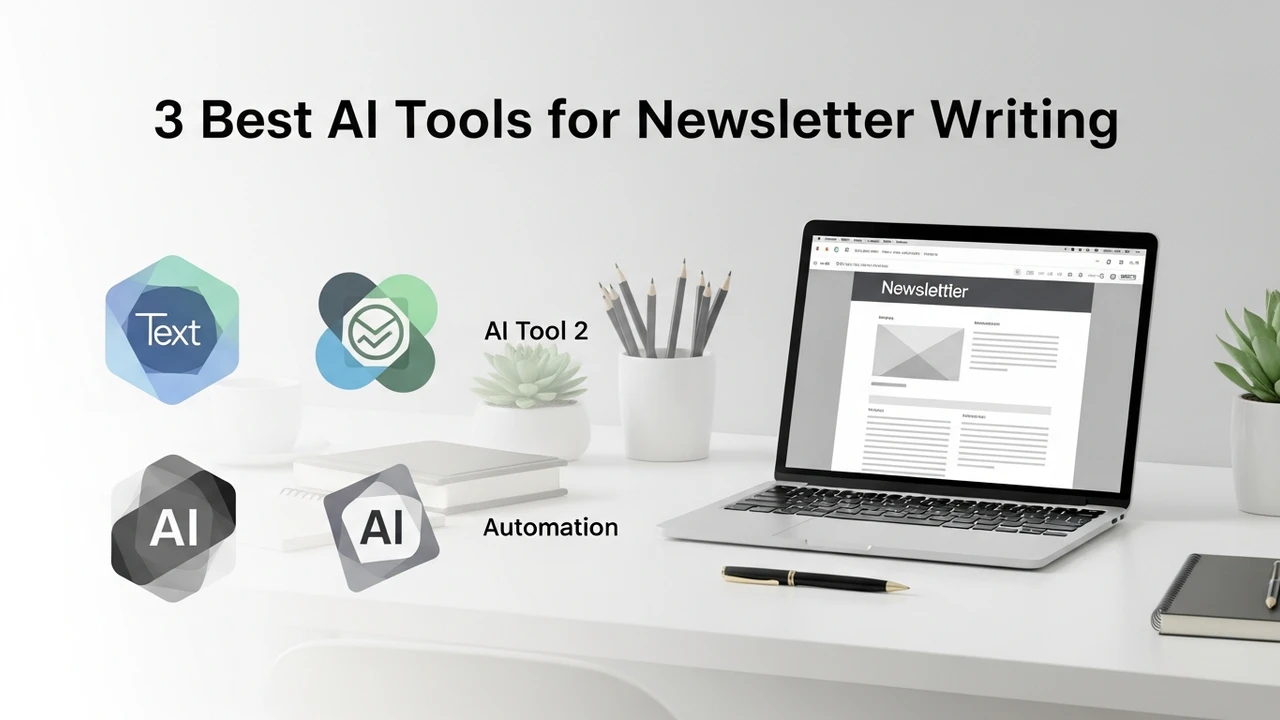
3 Best AI Tools for Newsletter Writing
Engage your subscribers with the 3 best AI tools for newsletters. Compare curation, writing, and personalization features for email campaigns.
Engage your subscribers with the 3 best AI tools for newsletters. Compare curation, writing, and personalization features for email campaigns.
3 Best AI Tools for Newsletter Writing
Let’s be real: keeping a newsletter consistent is a grind. You have to find the right topics, write engaging copy, make sure it doesn't sound like a robot wrote it, and then hope people actually open it. If you’re feeling the burnout, you aren't alone. The good news is that AI has finally caught up to the nuance of email marketing. It’s not just about spitting out generic text anymore; it’s about building a relationship with your readers at scale.
Why AI Newsletter Writing Tools Are Changing the Game
The biggest hurdle for any newsletter creator is the blank page. Staring at a blinking cursor while trying to summarize industry trends or craft a witty intro is a productivity killer. AI tools for newsletter writing act like a co-pilot. They help you curate content, summarize long-form articles, and even personalize subject lines so your open rates don't tank. By automating the heavy lifting, you get to focus on the strategy and the voice that makes your brand unique.
Top 3 AI Newsletter Writing Platforms Compared
If you are looking for the best tools to streamline your workflow, these three stand out for their specific strengths in curation, writing, and audience engagement.
1. Beehiiv AI Features
Beehiiv has quickly become the go-to for creators who want a professional look without the technical headache. Their AI suite is built directly into the editor. You can highlight a block of text and ask the AI to rewrite it, change the tone, or even summarize a link you’ve pasted. It’s incredibly fast and keeps you in the flow.
Best for: Creators who want an all-in-one platform for writing and hosting.
Pricing: Starts with a generous free tier; paid plans begin at $42/month.
2. Jasper AI for Email Marketing
Jasper is the heavyweight champion of long-form content. If your newsletter is more of a deep-dive essay or a thought-leadership piece, Jasper is your best friend. It has specific templates for email sequences and newsletters that allow you to input your brand voice so the output doesn't sound like a generic AI bot.
Best for: Marketers who need high-quality, long-form content that matches a specific brand voice.
Pricing: Starts at $39/month for individual creators.
3. Substack AI Integration and Third-Party Tools
While Substack itself is more minimalist, many writers use tools like Wordtune or ChatGPT alongside it to polish their drafts. Wordtune is particularly great for rephrasing sentences that feel a bit clunky, helping you maintain a conversational tone that keeps readers scrolling.
Best for: Writers who prefer a simple interface but want AI help for editing and refining.
Pricing: Wordtune offers a free version; premium starts at $9.99/month.
How to Use AI for Newsletter Curation and Personalization
Curation is where most people get stuck. You spend hours reading through RSS feeds or Twitter threads. Instead, use AI to summarize those links. You can feed a URL into an AI tool and ask it to 'extract the three most important takeaways for a professional audience.' This turns a two-hour research session into a ten-minute task.
Personalization is the next step. Don't just send the same email to everyone. Use AI to segment your list based on past engagement. If you have a segment of readers who only click on your 'Tech Trends' section, use AI to generate a specific intro for that group. It makes your readers feel like you’re talking directly to them, which is the secret sauce for high retention.
Comparing Features and Workflow Efficiency
When you look at these tools side-by-side, it comes down to your specific workflow. If you are a solo creator, Beehiiv’s integrated AI is likely all you need. It saves you from switching tabs. If you are a marketing team, Jasper’s ability to store brand 'knowledge'—like your company’s style guide and past successful emails—is a massive advantage. It ensures that every newsletter you send out sounds like it came from the same person, even if different team members are writing the drafts.
Real World Use Cases for AI Newsletter Automation
Imagine you run a weekly digest for a niche industry. You can set up an automation where an AI tool scans your favorite news sources every morning, pulls the top stories, and drafts a summary. By Friday, you have a nearly finished newsletter waiting for your final human touch. You add your personal commentary, hit send, and you’re done. This isn't just about saving time; it’s about consistency. Your readers will appreciate that you show up in their inbox at the same time every week with high-quality insights, and you won't have to sacrifice your weekends to make it happen.
The key is to remember that AI is the engine, but you are the driver. Always review the output, add your own anecdotes, and make sure the 'human' element is front and center. That’s what keeps people subscribed for years rather than unsubscribing after the first month.
:max_bytes(150000):strip_icc()/277019-baked-pork-chops-with-cream-of-mushroom-soup-DDMFS-beauty-4x3-BG-7505-5762b731cf30447d9cbbbbbf387beafa.jpg)