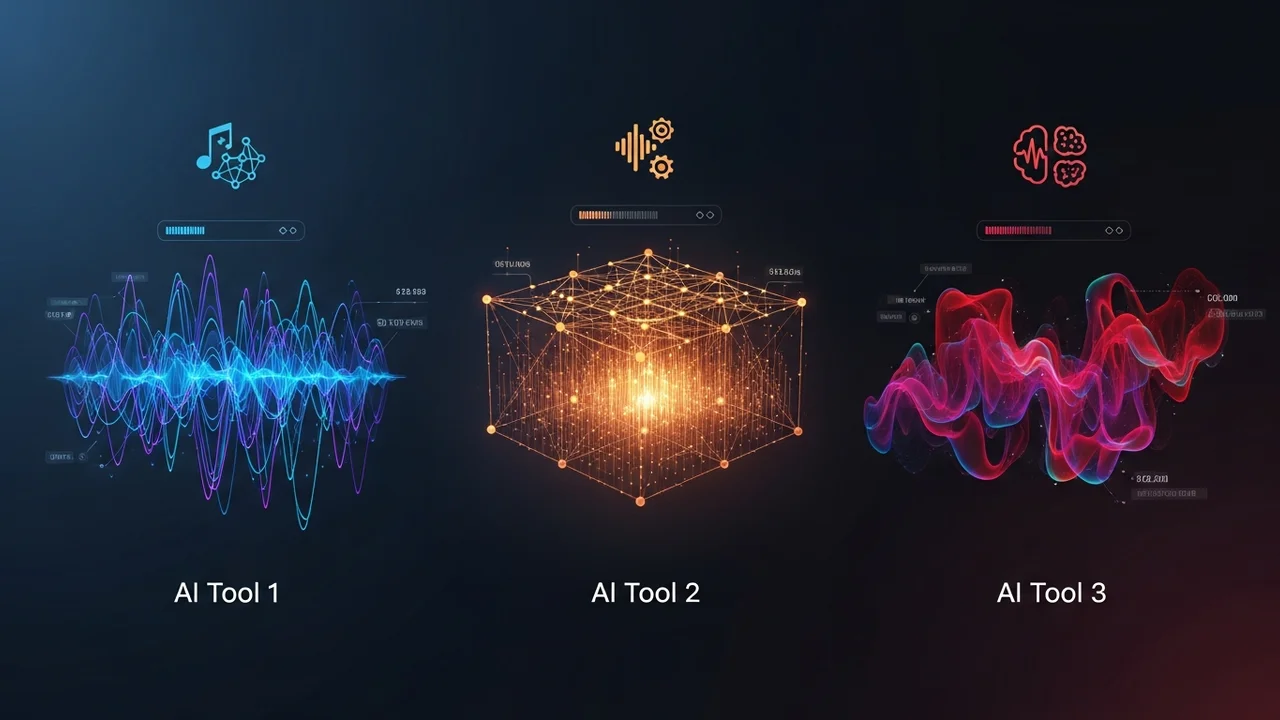
3 Best AI Tools for Music Transcription
Convert audio to sheet music with the 3 best AI transcription tools. Perfect for musicians wanting to transcribe solos and melodies.
Convert audio to sheet music with the 3 best AI transcription tools. Perfect for musicians wanting to transcribe solos and melodies.
3 Best AI Tools for Music Transcription
Have you ever sat down with your instrument, listening to a complex jazz solo or a lightning-fast guitar riff, and thought, "I wish I could just see the notes on a page"? We have all been there. Manually transcribing music is a rite of passage for many musicians, but let's be honest—it is incredibly time-consuming. You spend hours rewinding, slowing down tracks, and guessing chords. Thankfully, the landscape of music production has changed forever thanks to AI-powered transcription tools. These platforms can now listen to an audio file and spit out MIDI or sheet music in seconds. It is like having a professional musicologist sitting right next to you, ready to write down every single note.
Why Musicians Need AI Music Transcription Software
The primary benefit here is speed. If you are a gigging musician or a producer, you do not have the luxury of spending three days transcribing a single song. AI tools bridge the gap between hearing a melody in your head and getting it into your DAW (Digital Audio Workstation). Beyond just saving time, these tools are incredible for learning. By seeing the notes laid out, you can analyze the theory behind your favorite tracks, understand complex chord voicings, and improve your own playing. Whether you are a classical pianist, a bedroom producer, or a band leader, these tools are becoming essential parts of the modern creative toolkit.
Top 3 AI Music Transcription Tools Compared
There are dozens of apps out there, but not all of them are created equal. Some struggle with polyphonic audio (multiple instruments playing at once), while others are laser-focused on single-instrument melodies. Here are the three heavy hitters that actually deliver on their promises.
1. AnthemScore
AnthemScore is widely considered the gold standard for desktop-based transcription. It uses a sophisticated neural network to analyze audio and convert it into sheet music. What makes it stand out is the level of control it gives you. You can adjust the sensitivity, filter out specific frequencies, and even edit the notes directly within the software. It is perfect for those who need high-quality, printable scores.
2. Transcribe!
While not strictly an "AI generator" in the sense of auto-writing the score, Transcribe! is the ultimate companion for the manual transcriber. It uses AI-assisted pitch detection to help you identify notes, slow down audio without changing the pitch, and loop difficult sections. It is the tool of choice for professional musicians who want to keep their ears sharp while getting a little help from technology.
3. Melodyne
Melodyne is a beast. It is technically a pitch-correction tool, but its DNA is built on incredible audio-to-MIDI conversion. If you have a polyphonic recording, Melodyne can separate the notes and allow you to export them as MIDI data. It is incredibly accurate, especially for vocals and monophonic instruments. If you are working in a professional studio environment, this is the tool you want in your arsenal.
Pricing and Use Case Scenarios
When choosing a tool, you have to look at your budget and your specific needs. AnthemScore offers a one-time purchase model, usually around $49, which is great if you hate subscription fees. It is best for students and hobbyists who want to turn MP3s into PDF sheet music. Transcribe! also follows a one-time payment structure (around $39) and is ideal for those who want to learn songs by ear but need a bit of technical assistance to hear the nuances. Melodyne is the premium option, with versions ranging from $99 to over $600. It is definitely overkill for a casual player, but for a producer who needs to convert audio stems into MIDI for virtual instruments, it is worth every penny.
How to Get the Best Results from AI Transcription
Even the best AI isn't perfect. If you feed a muddy, low-quality recording into these tools, you are going to get messy results. To get the most out of your software, try to use clean, high-quality audio files. If you are transcribing a full band, try to isolate the instrument you want to focus on first. Many of these tools work best when they are not fighting against a wall of sound. Also, remember that AI is a starting point. You will almost always need to go in and do a little bit of cleanup—fixing a rhythm here or a pitch there—to make the transcription truly professional. Think of the AI as your assistant, not your replacement.
The Future of AI in Music Theory
We are only at the beginning of what is possible. As these models get better at understanding context, we will see tools that can not only transcribe notes but also identify complex jazz harmonies, suggest chord substitutions, and even write out full orchestral arrangements from a simple hummed melody. It is an exciting time to be a musician. Instead of being bogged down by the technical labor of transcription, we are being freed up to focus on the actual art of making music. So, pick one of these tools, load up your favorite track, and start exploring the notes behind the magic.
:max_bytes(150000):strip_icc()/277019-baked-pork-chops-with-cream-of-mushroom-soup-DDMFS-beauty-4x3-BG-7505-5762b731cf30447d9cbbbbbf387beafa.jpg)