3 Best AI Tools for Video Storyboarding
Plan your film projects with the 3 best AI storyboarding tools. Visualize your scenes and camera angles with AI-generated sketches.
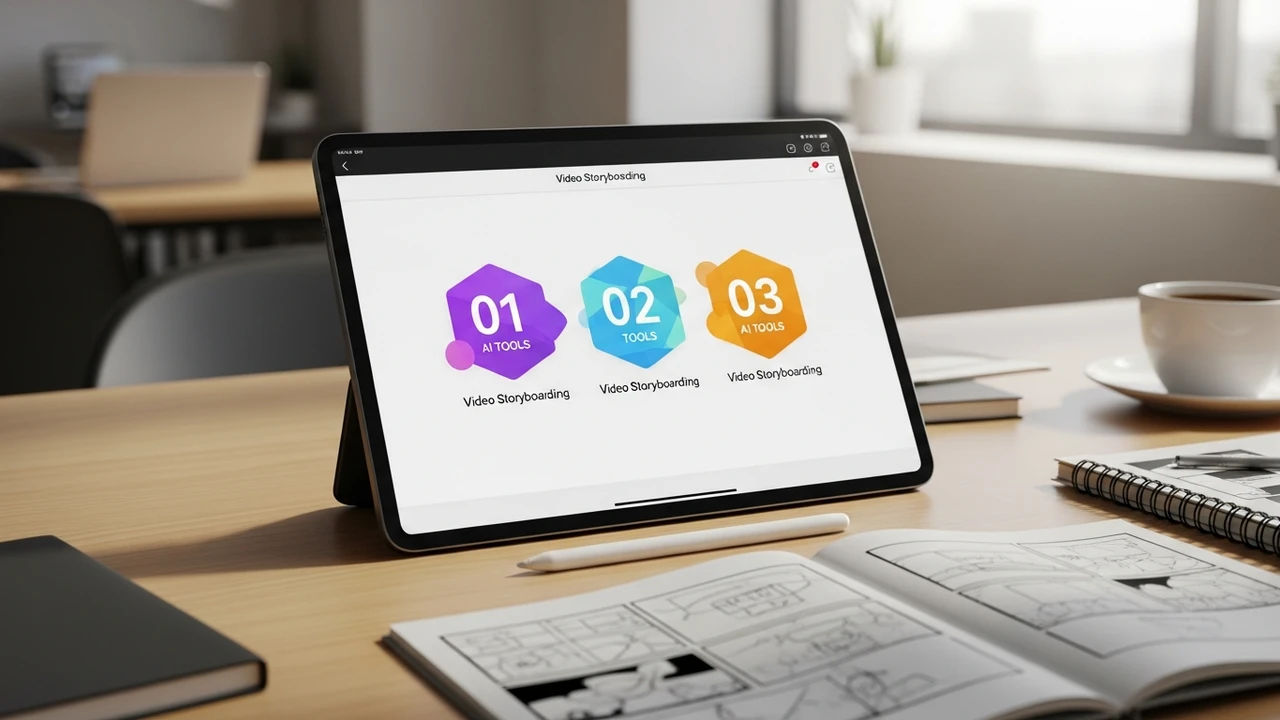
Plan your film projects with the 3 best AI storyboarding tools. Visualize your scenes and camera angles with AI-generated sketches.
3 Best AI Tools for Video Storyboarding
If you have ever spent hours sketching out stick figures or trying to explain a complex camera movement to a client, you know that storyboarding is often the most tedious part of pre-production. It is the bridge between your wild imagination and the actual camera lens. But what if you could skip the drawing phase and jump straight into visualization? That is where AI-powered storyboarding tools come in. They are changing the game for indie filmmakers, marketing agencies, and content creators who need to get their vision across without needing a degree in fine arts.
Why AI Storyboarding Tools Are Essential for Modern Video Production
Think about the last time you pitched a video concept. You probably had a script, maybe a mood board, and a lot of hand-waving. AI storyboarding tools change that dynamic entirely. By using generative AI, these platforms allow you to input a text prompt—like 'a cinematic wide shot of a cyberpunk city street at night, neon lights reflecting on wet pavement'—and get a high-quality visual representation in seconds. This isn't just about saving time; it is about communication. When your client or your crew can see exactly what you are thinking, the entire production process becomes smoother, faster, and significantly more professional.
Top 3 AI Storyboarding Software for Creative Professionals
After testing dozens of platforms, three stand out for their ease of use, visual fidelity, and integration into professional workflows. Let’s break them down.
1. Storyboarder by Wonder Dynamics
Wonder Dynamics has been making waves in the industry, and their approach to storyboarding is incredibly intuitive. It is designed for people who want to see their characters in a 3D space without needing to be a 3D animator. You can upload your own character models or use their library, and the AI handles the lighting and camera placement. It is perfect for directors who need to see how a scene will look before they step onto the set.
2. Boords for Professional Storyboard Creation
Boords is the industry standard for a reason. While it started as a traditional storyboard tool, their new AI features are a game-changer. You can type in a description, and the AI generates a frame that matches your style. What I love about Boords is the 'Animatic' feature. You can turn your static boards into a moving video with timing and transitions, which is perfect for showing a client the pacing of a commercial or a short film.
3. Canva Magic Media for Quick Visual Concepts
Don't sleep on Canva. While it is not a dedicated film tool, their Magic Media AI is surprisingly good for quick, rough storyboards. If you are working on a social media ad or a simple YouTube video, you can generate a series of images, drop them into a timeline, and have a rough cut ready in minutes. It is the most accessible option for beginners who don't want to deal with complex software.
Comparing AI Storyboarding Features and Pricing Models
When choosing the right tool, you have to look at your specific needs. If you are a high-end production house, Boords is worth the investment. They offer a subscription model starting around $30 per month, which is a steal considering the time it saves. Wonder Dynamics is more of a specialized tool, often used for complex VFX-heavy projects, and their pricing is usually custom-quoted based on the scale of your production. Canva is the budget king, with a free tier that is surprisingly robust, and a Pro plan for about $12 a month that gives you access to their full suite of AI tools.
Practical Use Cases for AI Storyboarding in Video Projects
Imagine you are shooting a music video. You have a specific vision for a tracking shot that follows the artist through a crowded room. Instead of trying to describe it, you use an AI tool to generate a sequence of frames showing the camera path, the lighting, and the framing. You send this to your cinematographer, and they immediately understand the technical requirements. Or, consider a corporate training video. You can use AI to generate consistent character designs across 50 different scenes, ensuring that your 'employee' character looks the same from start to finish. This level of consistency was impossible for solo creators just a few years ago.
Tips for Getting the Best Results from AI Storyboard Generators
The secret to great AI storyboards is in the prompt. Don't just say 'a man in a room.' Be specific. Use camera terminology. Try prompts like 'Medium shot, low angle, dramatic lighting, cinematic color grading, 35mm lens.' The more you speak the language of film, the better the AI will perform. Also, don't be afraid to iterate. If the first result isn't perfect, tweak the lighting or the camera angle in the prompt. Most of these tools allow you to keep the character consistent while changing the background or the action, which is a massive time-saver for long sequences.
At the end of the day, these tools are here to help you tell better stories. They don't replace the director's eye, but they certainly make it easier to share that vision with the world. Whether you are a seasoned pro or just starting out, incorporating AI into your pre-production workflow is one of the smartest moves you can make this year.
:max_bytes(150000):strip_icc()/277019-baked-pork-chops-with-cream-of-mushroom-soup-DDMFS-beauty-4x3-BG-7505-5762b731cf30447d9cbbbbbf387beafa.jpg)